

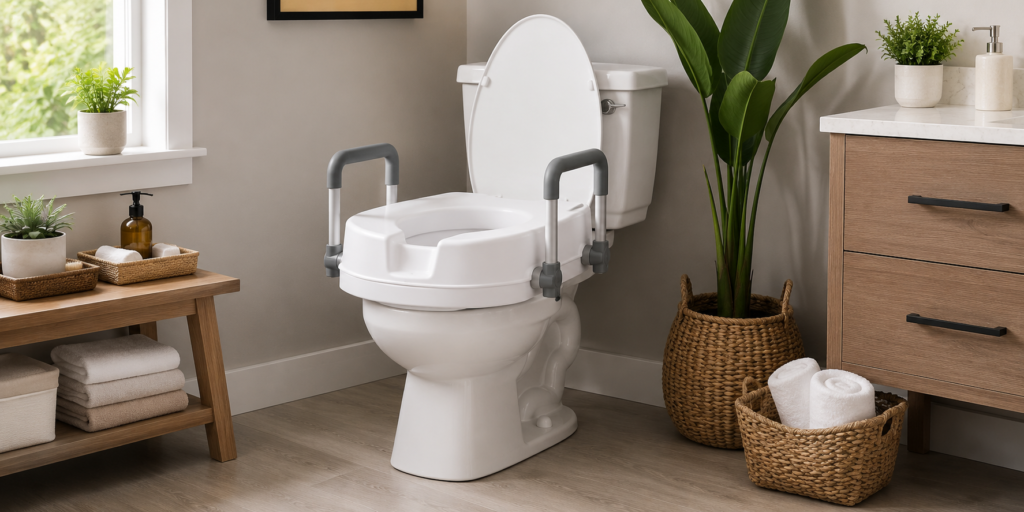
Best Raised Toilet Seats for Seniors
Sitting down and standing up from the toilet can become more challenging over time, especially for seniors with limited mobility, joint stiffness, or balance concerns. Because the toilet is used multiple times a day, even small difficulties can quickly become frustrating.
Raised toilet seats are designed to make this daily task easier by increasing seat height and, in some cases, adding extra support. This guide explains what to look for and highlights the best types of raised toilet seats for seniors who want added comfort and stability at home.
If you’re evaluating multiple bathroom support options, our bathroom safety guide covers additional products and strategies to reduce fall risk at home.
This article contains affiliate links. If you make a purchase through these links, we may earn a small commission at no extra cost to you.
Quick Picks: Best Raised Toilet Seats at a Glance
BEST OVERALL
Lunderg Raised Seat
BEST BUDGET
Carex Raised Seat
BEST STABILITY
Bemis Raised Seat
Raised Toilet Seats Compared
| Product | Height Increase | Handles | Weight Capacity | Best For |
|---|---|---|---|---|
| Lundberg Toilet Seat | 3″ | Optional | 300 lbs | Best Overall |
| Vive Raised Toilet Seat | 3.5″ | Yes | 300 lbs | Extra Support |
| Carex E-Z Lock | 5″ | No | 300 lbs | Budget Choice |
| Medline Raised Seat | 4″ | Yes | 600 lbs | Higher Weight Capacity |
| Bemis Assurance | 3″ | Optional | 1000 lbs | Stability |
Best Raised Toilet Seats for Seniors Reviewed
Lunderg Solva Raised Toilet Seat with Handles
✅ Why we recommend it: The Lundberg Toilet Seat combines a comfortable raised height with a modern appearance that blends naturally into most bathrooms. Unlike bulky medical-style options, it provides extra height without making the toilet look institutional, making it a popular choice for seniors who want both comfort and aesthetics.
🔍 KEY FEATURES:
Pros:
Cons:
Best For: Seniors looking for the best overall balance of comfort, appearance, and long-term usability.
Vive Raised Toilet Seat
✅ Why we recommend it: The Vive Raised Toilet Seat includes integrated handles that provide valuable assistance when sitting down and standing up. Its secure fit and user-friendly design make it a popular choice for seniors with balance concerns or reduced leg strength.
🔍 KEY FEATURES:
Pros:
Cons:
Best For: Seniors who need additional support and leverage when using the toilet.
Carex E-Z Lock Raised Toilet Seat
✅ Why we recommend it: The Carex E-Z Lock offers excellent value by combining a substantial height increase with a secure locking system. It provides dependable support without the higher cost of premium models.
🔍 KEY FEATURES:
Pros:
Cons:
Best For: Budget-conscious seniors who want a safe and secure raised toilet seat.
Medline Bariatric Raised Toilet Seat
✅ Why we recommend it: The Medline Bariatric Raised Toilet Seat is designed for users who need additional strength and stability. Its reinforced construction and integrated armrests provide exceptional support and confidence.
🔍 KEY FEATURES:
Pros:
Cons:
Best For: Seniors who require higher weight capacity and maximum stability.
Bemis Assurance
✅ Why we recommend it: The Bemis Assurance provides a more permanent bathroom safety solution than many removable raised seats. Its durable design and secure installation help create a stable and comfortable experience for long-term use.
🔍 KEY FEATURES:
Pros:
Cons:
Best For: Seniors seeking a permanent, highly stable bathroom safety upgrade.
Why Raised Toilet Seats Can Improve Comfort and Safety
Standard toilet heights can require more effort to sit down and stand up, particularly for individuals with knee, hip, or balance limitations. A raised toilet seat reduces how far the body needs to lower and lift, making the movement more manageable.
For many seniors, this added height helps conserve energy, reduce strain, and improve confidence when using the bathroom.
What Height Raised Toilet Seat Do You Need?
The right height depends on the user’s mobility, leg strength, and the existing height of the toilet. Most seniors do well with a raised toilet seat that adds between 2 and 5 inches.
A 2-inch riser is often enough for individuals with mild knee or hip discomfort. A 3-inch riser is one of the most popular options and provides a noticeable improvement in comfort without making the toilet feel too high. A 4- to 5-inch riser may be beneficial for seniors recovering from hip replacement surgery or those who have significant difficulty standing from a seated position.
If possible, measure the height of the existing toilet and compare it to ADA-compliant comfort-height toilets, which are typically 17 to 19 inches from the floor to the seat. The goal is to create a sitting height that allows the user to stand with less strain while still keeping their feet flat on the floor.
Raised Toilet Seat vs Toilet Seat Riser
The terms “raised toilet seat” and “toilet seat riser” are often used interchangeably, but there are some differences.
A raised toilet seat is a complete device that attaches on top of the existing toilet bowl and increases seat height. Some models include handles or locking mechanisms for added stability.
A toilet seat riser is typically installed underneath the existing toilet seat, creating additional height while preserving the appearance and function of the original seat. Many homeowners prefer risers because they are less noticeable and can feel more permanent.
For seniors who need additional support when sitting and standing, a raised toilet seat with integrated handles is often the safest and most user-friendly option.
Free Safety Resource
We have created a simple 2-page Bathroom Safety Checklist to help seniors and caregivers spot common fall risks and make easy safety improvements.
🔍 Download the free checklist here:
Types of Raised Toilet Seats for Seniors
Raised Toilet Seats With Handles
Raised toilet seats with handles provide additional support when sitting down or standing up. The handles act as armrests, offering extra stability for individuals who need more balance assistance. A raised toilet seat with sturdy handles and a secure locking system can be a helpful option for seniors who want added confidence during use.
Raised Toilet Seats Without Handles
Some raised toilet seats are designed without handles and focus solely on increasing seat height. These models tend to have a smaller footprint and may work well in tighter bathrooms. Many people prefer a simple raised toilet seat that locks securely in place for a clean, low-profile solution.
Locking vs Non-Locking Raised Toilet Seats
Locking raised toilet seats attach firmly to the toilet bowl using clamps or brackets, helping prevent movement. Non-locking models may rely on friction or weight to stay in place. For everyday use, a locking raised toilet seat designed for stability is often preferred for added peace of mind.
Key Features to Look For in a Raised Toilet Seat
Raised toilet seats come in different styles and designs. Paying attention to the following features can help ensure a comfortable and secure fit.
Not all raised toilet seats offer the same level of comfort, stability, or support. Before choosing a model, consider the following features to ensure it meets the user’s needs and bathroom setup.
Height Increase
Raised toilet seats typically add between 2 and 5 inches of height. Choosing the correct height can reduce strain on the knees, hips, and lower back while making it easier to sit and stand. Most seniors find that a height increase of 3 to 4 inches provides a comfortable balance between support and usability.
Handles or Armrests
Integrated handles can provide valuable leverage when sitting down or standing up. Seniors with mobility limitations, balance concerns, or recovering from surgery often benefit from models that include sturdy arm supports.
Secure Attachment System
Look for raised toilet seats that lock securely onto the toilet bowl. A stable attachment system helps prevent shifting or movement during use, which can significantly improve safety and confidence.
Weight Capacity
Weight capacities vary considerably between models. While many standard raised toilet seats support up to 300 pounds, bariatric models may support 600 pounds or more. Always choose a seat rated appropriately for the intended user.
Toilet Compatibility
Not every raised toilet seat fits every toilet. Before purchasing, verify compatibility with the toilet’s shape and dimensions, especially if you have an elongated or specialty toilet bowl.
Ease of Cleaning
Bathroom safety equipment should be easy to maintain. Smooth, non-porous surfaces are easier to clean and help reduce the buildup of bacteria and odors.
Permanent vs. Removable Design
Some raised toilet seats are designed for temporary use and can be removed quickly when no longer needed. Others are intended as long-term solutions and offer a more integrated appearance. Consider whether the seat will be used during recovery or as a permanent bathroom safety upgrade.
Comfort
A raised toilet seat should feel stable and comfortable during daily use. Features such as contoured seating surfaces, wider openings, and ergonomic designs can improve comfort, especially for seniors who use the seat multiple times each day.
Seniors who need additional support when sitting down or standing up may also want to consider toilet seat risers with handles, which provide built-in armrests for extra stability during bathroom transfers.
Some seniors may benefit more from added side support, which is where toilet safety rails can be a better solution than a raised seat alone. If you need more guidance on safety rails check out our roundup of the Best Toilet Safety Rails for Seniors.
If stepping over the side of a bathtub is difficult, a non-slip bath mat provides additional stability during transfers.
Common Mistakes to Avoid
Choosing a seat that does not fit the toilet shape
Ignoring weight capacity limits
Selecting a model without checking how it locks in place
Overlooking ease of cleaning and maintenance
Tips for Using a Raised Toilet Seat Safely
Make sure the seat is firmly secured before use
Check locks or clamps periodically
Keep the surrounding area clear of clutter
Pair with grab bars if additional support is needed
Final Thoughts
Raised toilet seats are a simple yet effective way to improve comfort and confidence in the bathroom. With the right height, secure fit, and optional support features, they can make daily routines feel easier and less physically demanding.
By choosing a raised toilet seat that fits your needs and bathroom setup, it’s possible to create a more supportive and comfortable environment without major changes.
Frequently Asked Questions
What height raised toilet seat is best for seniors?
The ideal height depends on the user’s mobility and comfort needs. Many seniors prefer a seat that adds 2–4 inches for everyday use, but people with knee or hip pain may feel more comfortable with a 4–5 inch increase. Always measure the toilet bowl and test comfort when possible.
Do raised toilet seats fit all toilets?
Most raised toilet seats are designed to fit standard round or elongated toilets. Some are universal, but it’s important to check the product’s compatibility with your specific toilet shape before purchasing.
Are raised toilet seats safe for seniors to use?
Yes, when properly installed and matched to the user’s needs. Raised seats reduce strain on joints and make it easier to sit and stand, but additional support like grab bars may still be recommended for balance.
Can I install a raised toilet seat myself?
Many raised toilet seats are designed for easy, tool-free installation and can be installed by users or caregivers. However, some models require tools for a secure fit. Always follow the manufacturer’s instructions for safety.
How do I clean a raised toilet seat?
Raised toilet seats can usually be cleaned with mild soap and water. Avoid harsh chemicals that can degrade materials. Remove the seat periodically to clean around the base and keep the toilet area sanitary.
Do raised toilet seats come with handles?
Some models include integrated handles for added support, while others are simple height extenders. If handle support is important, choose seats specifically marketed with armrests or consider a toilet seat riser with handles.