

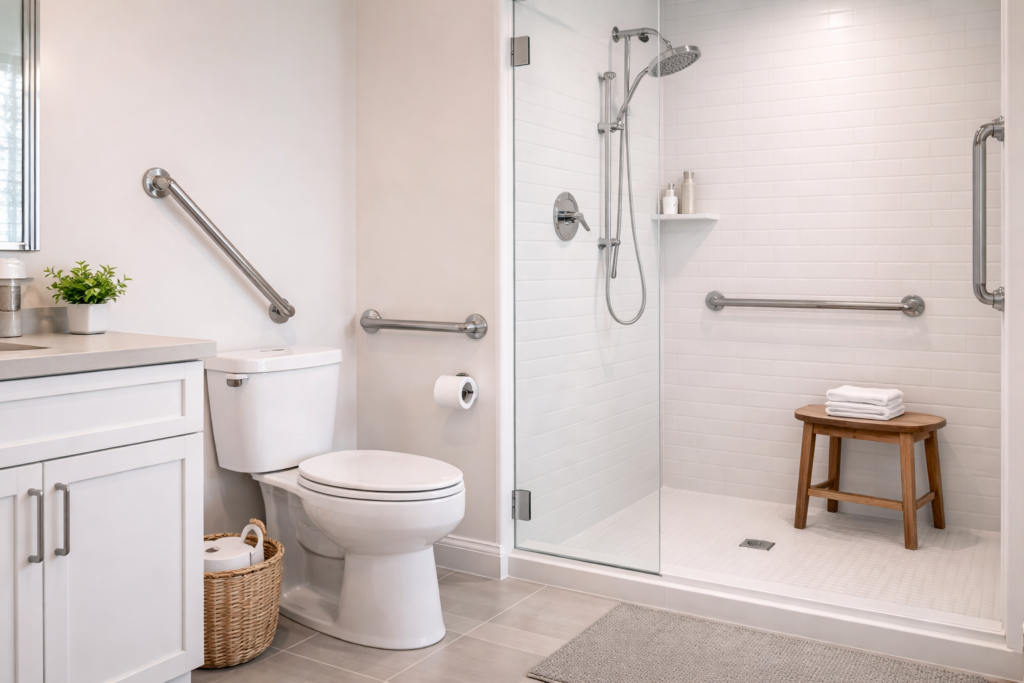
Grab Bar Height Guide: ADA Standards for Showers, Toilets & Bathrooms
Grab bar height is one of the most important factors in creating a safer bathroom. Whether you’re installing grab bars in a shower, beside a toilet, or near a bathtub, placing them at the correct height makes them easier to reach and more effective when you need support.
According to ADA bathroom accessibility guidelines, most horizontal grab bars should be installed 33 to 36 inches above the finished floor, measured to the top of the grab bar. While these standards were developed for public and commercial spaces, many homeowners also use them as a trusted starting point for residential bathroom safety.
In this guide, you’ll learn the recommended grab bar height for showers, toilets, and bathtubs, when adjustments may make sense, and how proper placement can improve comfort, stability, and fall prevention.
If you’re still deciding where grab bars should go in the bathroom, our guide on where to place grab bars in the bathroom explains recommended locations near showers, tubs, and toilets. For a broader overview of bathroom safety solutions that help reduce fall risk, see our Bathroom Safety guide.
This article is for general informational purposes only and is not medical advice. It also contains affiliate links. If you make a purchase through these links, we may earn a small commission at no extra cost to you.
Quick Answer: Grab Bar Height
The standard grab bar height is 33 to 36 inches from the floor, measured to the top of the bar.
- Showers and bathtubs: 33–36 inches
- Near toilets: 33–36 inches
- Vertical grab bars: placed based on reach and entry support
This range follows ADA guidelines and provides safe, comfortable support for most adults.
Along with proper grab bar height, adding non-slip surfaces and shower seating can further improve bathroom safety. Learn more in our guide on how to make a bathtub safer for seniors.
Standard Grab Bar Height (ADA Guidelines)
Most bathroom grab bars are installed between 33 and 36 inches from the floor when measured to the top of the bar. This range comes from ADA accessibility guidelines and is widely used in homes, hospitals, and assisted living environments.
This height works well for most adults because it allows users to grip the bar comfortably while standing or transitioning between sitting and standing.
Typical installation heights include:
- 33–36 inches from the floor for horizontal grab bars
- measured to the top of the bar, not the center
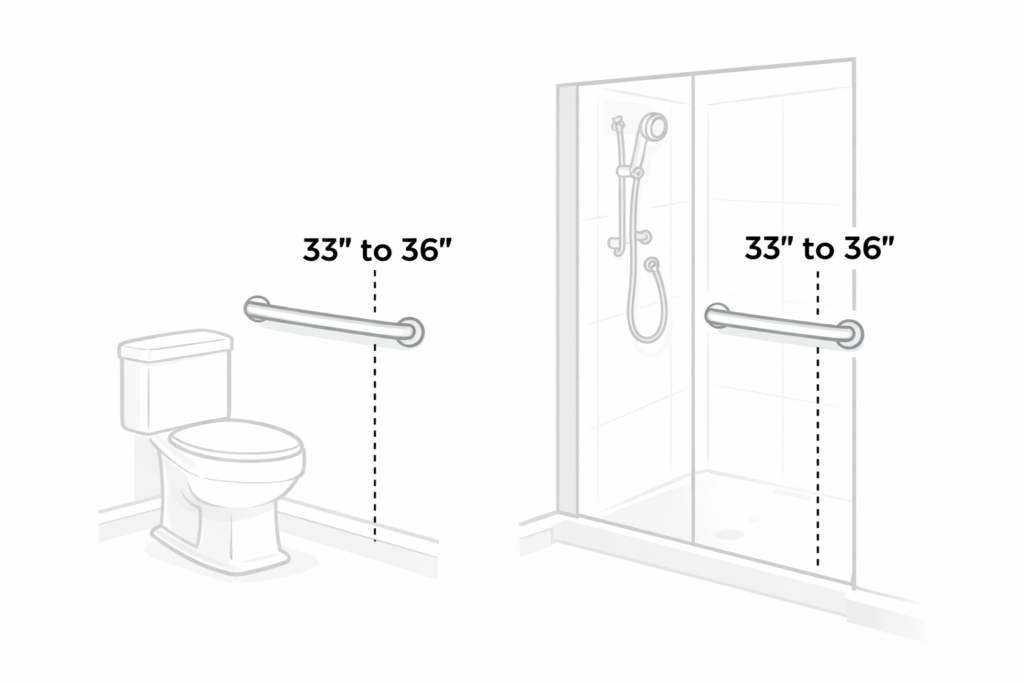
While ADA guidelines are designed for public accessibility, they are often used as a helpful reference for residential bathroom safety as well.
Grab Bar Height for Showers
Grab bars inside showers are usually installed within the same 33–36 inch height range, but placement can vary depending on the shower layout.
Inside showers, grab bars are commonly installed:
- horizontally along the back wall
- along the side wall near the controls
- near the entrance to the shower
In some cases, vertical grab bars may be installed near the shower entrance to help with stepping in or out.
If you’re planning grab bar locations, our guide on how to choose the right bathroom grab bars for seniors explains different grab bar types and how they’re used.
If you’re installing grab bars as part of a remodel, our guide to walk-in tubs vs walk-in showers can help you choose the right bathing solution.
Proper grab bar height matters, but fiberglass shower walls may also require reinforced mounting support. Learn more in our guide on best grab bars for fiberglass showers.
Grab Bar Height Near Toilets
Grab bars installed beside toilets help provide support when sitting down or standing up. These bars are typically mounted on the wall next to the toilet or on the rear wall behind it.
For most bathrooms:
- the bar height still falls within the 33–36 inch range
- the bar is positioned within comfortable reach while seated
Some bathrooms may also use fold-down grab bars if wall space is limited. These bars can be lowered when needed and raised when not in use.
If you’re comparing grab bar styles, our guide on fold-down vs fixed grab bars explains when each type is typically used.
Vertical Grab Bar Placement Height
Vertical grab bars are commonly installed near the entrance of showers or bathtubs. Instead of providing horizontal support, they help users maintain balance while stepping over the tub edge or moving into the shower.
Vertical bars are typically installed so that the lower portion of the bar is easy to reach when entering the shower.
Because vertical bars are used during movement, their exact height can vary depending on the user and the bathroom layout.
Many bathrooms combine both styles:
- horizontal grab bars inside the shower
- vertical grab bars near the entrance
This setup provides support during both standing and transitional movements.
Factors That Affect Grab Bar Height
While ADA guidelines provide a helpful reference, the best height for grab bars may vary depending on the user and the bathroom setup.
Factors that can influence placement include:
User Height Matters
Shorter or taller individuals may prefer slightly different heights for comfortable gripping.
Bathroom Layout
Shower walls, tile placement, and existing studs can affect installation locations.
If you have limited space, please see our guide on grab bar placement for small bathrooms.
Type of Grab Bar
Some bars are mounted horizontally, vertically, or at an angle depending on their purpose.
Support Needs
People with limited mobility may prefer bars positioned slightly lower for easier reach.
In most cases, installing grab bars within the standard ADA range provides a safe and practical solution.
▶️ Key Takeaway
Most grab bars should be installed 33–36 inches from the floor, measured to the top of the bar.
This range provides the best balance of safety and comfort for most users.
Residential Grab Bar Height vs. ADA Guidelines
Many homeowners wonder whether they need to follow ADA grab bar height requirements when installing grab bars in a residential bathroom. The short answer is no, ADA standards generally apply to public buildings, commercial facilities, and spaces that must meet accessibility requirements.
However, the recommended 33 to 36 inch grab bar height is still an excellent starting point for most homes. These measurements were developed through accessibility research to provide comfortable reach, secure support, and consistent placement for a wide range of users.
For residential bathrooms, it’s perfectly acceptable to make small adjustments when they improve comfort or safety. For example, someone who is significantly shorter or taller, or a person with limited mobility who primarily transfers from a wheelchair or shower chair, may benefit from a slightly different installation height.
The goal isn’t simply to match an ADA measurement, it’s to install grab bars where they provide the safest and most natural support for the person using the bathroom every day.
Homeowner Tip: If you’re installing grab bars in your own home, use the ADA recommendation of 33–36 inches from the finished floor to the top of the grab bar as your starting point, then adjust only if the user’s specific needs make another height more comfortable or practical.
Residential vs. ADA Grab Bar Height at a Glance
Key Takeaway: For most residential bathrooms, the ADA recommendation of 33–36 inches from the finished floor to the top of the grab bar is an excellent starting point. If the grab bar is being installed for a specific individual, small adjustments may improve comfort and accessibility without compromising safety.
Does Grab Bar Height Change for Seniors?
While standard height is 33–36 inches, seniors may benefit from slight adjustments:
- Lower placement for seated users
- Higher placement for taller individuals
- Customized positioning for mobility limitations
Comfort and accessibility should always come before strict measurements.
Why Proper Installation Matters
Correct installation is just as important as height. Grab bars must be securely mounted into wall studs or installed using appropriate mounting hardware.
When properly installed, many grab bars can support several hundred pounds of weight.
If you’re unsure how much weight a grab bar should safely support, our guide on grab bar weight capacity and safety ratings explains what to look for before installation.
Grab Bar Height By Location (Quick Guide)
| LOCATION | RECOMMENDED HEIGHT |
|---|---|
| Shower | 33-36 inches |
| Bathtub | 33-36 inches |
| Toilet | 33-36 inches |
| Vertical Bars | Based on Reach |
Common Grab Bar Installation Mistakes
Installing bars too high
If the bar is above comfortable reach, it may not provide the intended support.
🔨 Fix: Install within the 33-36 inch range and test reach before final mounting.
Mounting only into drywall
Grab bars should be anchored into studs or installed using proper mounting systems.
🔨 Fix: Make sure to mount grab bars securely into wall studs, not just dry wall.
Placing bars too far from where support is needed
Grab bars should be positioned where users naturally reach for support.
🔨 Fix: Position the bar within easy reach, near areas like the shower entrance or the toilet.
Careful planning and secure installation help ensure grab bars provide reliable support in everyday use.
Before you go — don’t miss this!
Free Bathroom Safety Checklist (PDF)
If you’re making updates to improve bathroom safety, this checklist can help you catch small issues that are easy to overlook.
It’s a quick, printable guide for seniors and caregivers.
👇Get the free Bathroom Safety Checklist here:
Quick Summary
- Standard grab bar height: 33–36 inches from floor
- Adjust height based on user comfort and reach
- Placement matters as much as height
- Always install into wall studs for safety
For full placement guidance, see our complete guide on grab bar placement.
Check out even more helpful insights in our Bathroom Safety Checklist for Seniors Living Alone.
Common Questions About Grab Bar Height
Is 36 inches too high for a grab bar?
For most users, 36 inches is still within the recommended range. However, shorter individuals may find slightly lower placement more comfortable.
Should grab bars be the same height everywhere?
Not always. While 33–36 inches is standard, placement may vary slightly depending on location (shower vs toilet) and user needs.
Can grab bars be installed lower than ADA guidelines?
Yes. In residential settings, grab bars can be adjusted based on comfort and accessibility, especially for seated users or those with limited mobility.
Final Thoughts on Grab Bar Height
Choosing the right grab bar height is one of the most important steps in creating a safer bathroom. While the standard 33–36 inch range works well for most situations, small adjustments can make a big difference in comfort and usability.
The key is to focus on how the grab bar will actually be used whether for standing support, sitting transitions, or safe entry into the shower. When properly placed and securely installed, grab bars provide reliable support and help reduce the risk of slips and falls.
If you’re planning a full bathroom safety setup, it’s helpful to look beyond height alone. Placement, bar type, and overall design all play a role in creating a safe and functional space.
For a complete setup, see our guide on where to place grab bars in the bathroom and explore the best grab bars for showers to find safe, reliable options for different layouts.
Frequently Asked Questions
What is the standard height for bathroom grab bars?
Most grab bars are installed between 33 and 36 inches from the floor when measured to the top of the bar.
How high should grab bars be in a shower?
Grab bars inside showers are typically installed within the 33–36 inch height range, though vertical bars may be positioned differently depending on the layout.
How high should grab bars be beside a toilet?
Grab bars beside toilets are generally mounted within the 33–36 inch range, positioned so they are easy to reach while seated.
Are ADA grab bar heights required in homes?
ADA guidelines are primarily designed for public accessibility, but many homeowners follow the same recommendations because they provide safe and comfortable placement.