

Grab bars are one of the most common bathroom safety additions for seniors and caregivers, especially in areas like the shower or near the toilet where balance matters most. When choosing between permanently installed grab bars and suction grab bars, safety is often the biggest concern. While both options may look similar, they are designed for very different levels of support.
When exploring options, many people notice two main types: permanently installed grab bars and suction grab bars. While they may look similar at first glance, they are designed for very different purposes. In this guide, we’ll compare grab bars and suction grab bars to help you understand how they differ and which option may be more appropriate for everyday bathroom use.
For a broader overview of bathroom safety solutions that help reduce fall risk, see our Bathroom Safety guide.
This article is for general informational purposes only and is not medical advice. It also contains affiliate links. If you make a purchase through these links, we may earn a small commission at no extra cost to you.
What this guide covers
- What standard grab bars are and how they work
- What suction grab bars are designed for
- Key differences in stability, installation, and use
- Important safety considerations
What are standard grab bars?
Traditional grab bars are permanently installed and provide strong, reliable support when properly mounted into wall studs. A wall-mounted grab bar designed for bathroom use offers the highest level of stability. They are designed to support body weight and provide reliable stability in bathrooms.
These grab bars are commonly installed near toilets, inside showers, and along bathtub walls. Because they are fixed in place, they offer consistent support and are often recommended for long-term bathroom safety improvements.
Key characteristics of standard grab bars:
- Mounted to the wall with screws or anchors
- Designed to support significant weight
- Available in various lengths and finishes
- Intended for long-term use
Proper installation and placement are important, and our guide on where to place grab bars in the bathroom explains common locations that provide the most support.
What are suction grab bars?
Suction grab bars are easier to install and don’t require drilling, but they should be used with caution. Some people find a high-quality suction grab bar for temporary support helpful for light balance assistance. Suction grab bars attach to smooth surfaces, such as tile or glass, using suction cups rather than screws.
These grab bars are often marketed as a temporary or travel-friendly option. While they can provide a handhold for balance assistance, they are not designed to support full body weight in the same way as permanently mounted grab bars.
Key characteristics of suction grab bars:
- Attach using suction cups
- Easy to install and remove
- Best suited for smooth, non-porous surfaces
- Intended for light balance assistance
Key differences between grab bars and suction grab bars
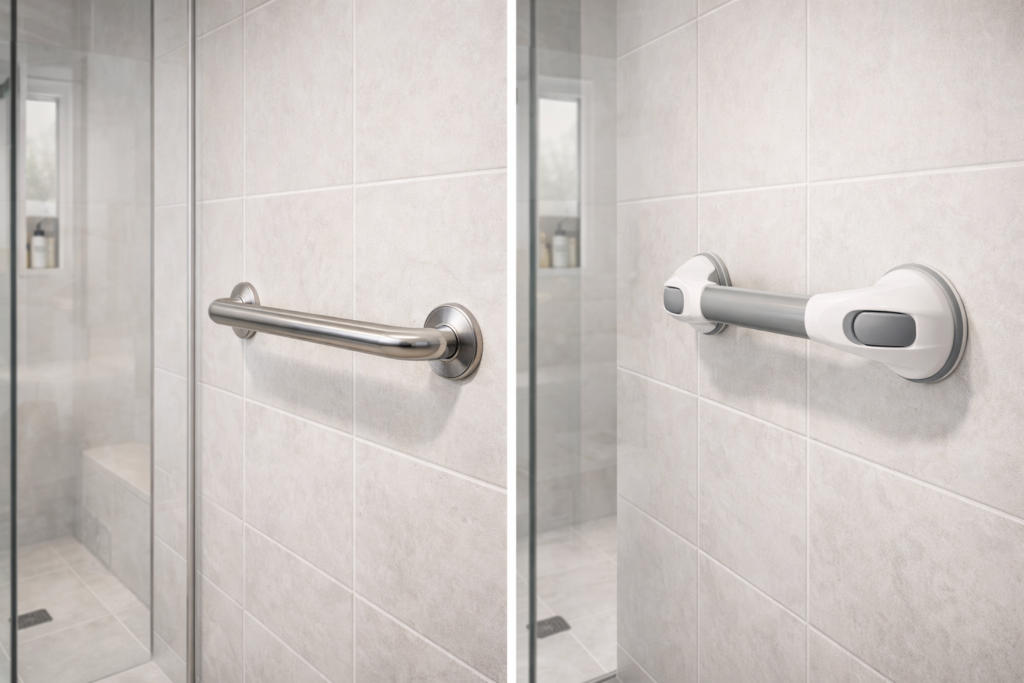
The most important difference between standard grab bars and suction grab bars is how securely they are attached. Permanently installed grab bars are designed to remain fixed and stable, while suction grab bars rely on surface adhesion that can weaken over time.
Installation is another major difference. Standard grab bars typically require drilling and proper placement, which may involve professional installation. Suction grab bars can be installed quickly without tools but must be checked regularly to ensure they remain securely attached.
At a glance:
- Stability: Standard grab bars offer the highest level of support
- Installation: Suction grab bars are quicker to install
- Weight support: Standard grab bars are designed to support body weight
- Use case: Suction grab bars are best for temporary or light support
Which Option Is Safer for Everyday Bathroom Use?
For most seniors, permanently installed grab bars are the safer option for everyday bathroom use. They are designed to support body weight and remain stable over time when mounted correctly. Suction grab bars may be helpful for light balance assistance or temporary situations, but they should not be relied on for primary support in wet areas like showers or tubs.
Important safety considerations
When choosing between these options, safety should always be the top priority. A grab bar that becomes loose or detaches unexpectedly can create additional risk rather than support.
Standard grab bars are generally the safer option for daily use, especially for individuals who rely on them for steady support. Suction grab bars may be helpful as a reminder handhold or for short-term situations, but they should never be relied upon for full weight support unless the manufacturer clearly states otherwise.
In addition to grab bars, non-slip bath mats can help improve traction and reduce slipping hazards in wet areas. You can see our top picks in our guide to Best Non-Slip Bath Mats for Seniors.
Free Safety Resource
I created a simple 2-page Bathroom Safety Checklist to help seniors and caregivers spot common fall risks and make easy safety improvements.
👇 Download the free checklist here:
Which option makes more sense?
The right choice depends on how the grab bar will be used. For long-term bathroom safety and consistent support, permanently installed grab bars are typically the better option.
Suction grab bars may be appropriate in limited situations, such as temporary use, travel, or for individuals who only need light balance assistance. Understanding these differences can help you choose an option that fits your bathroom setup and comfort level.
Final thoughts
Both standard grab bars and suction grab bars serve a purpose, but they are not interchangeable. Knowing how they differ can help you make a more informed decision when improving bathroom comfort and support.
The right choice depends on how much support is needed and how the bathroom is used. Comparing both permanently installed grab bars and suction grab bars can help determine what best fits a specific situation. Taking the time to choose the right option—and installing it correctly—can make everyday bathroom routines feel more comfortable and manageable over time.
Frequently Asked Questions (FAQ)
Which type of grab bar is best for shower safety?
For shower safety, permanently mounted grab bars installed into wall studs are usually the best option. Suction grab bars may be used as supplemental handholds but should not be the primary safety feature in wet areas.
Are suction grab bars safe for seniors?
Suction grab bars can be safe for temporary or light support, such as steadying yourself briefly, but they are not designed to support full body weight. For activities like getting in and out of the shower or standing from the toilet, permanently installed grab bars are generally safer.
Can suction grab bars fall off unexpectedly?
Yes. Suction grab bars can lose suction if the surface is not perfectly smooth, clean, and dry. Changes in humidity or pulling at an angle can also reduce their grip, which is why they should not be relied on for primary support.
Do permanent grab bars require drilling?
Yes. Permanent grab bars are typically installed by drilling into wall studs or using heavy-duty anchors. This installation method provides strong, reliable support compared to suction-mounted options.
Can suction grab bars damage tile or walls?
Most high-quality suction grab bars do not damage smooth tile when installed correctly. However, repeated removal or improper placement may leave marks or affect grout over time.
Are there weight limits for suction grab bars?
Yes. Manufacturers often list weight limits, but these depend heavily on correct installation and surface conditions. Even with stated limits, suction grab bars are generally less reliable than permanently installed grab bars for load-bearing support.
Can seniors install permanent grab bars themselves?
Some seniors or caregivers can install permanent grab bars if they are comfortable using tools and locating wall studs. However, many people choose professional installation to ensure the grab bar is mounted securely and safely.
Should I use both suction and permanent grab bars?
In many bathrooms, permanent grab bars should be the primary source of support. Suction grab bars can be helpful as secondary or temporary handholds but should not replace permanently installed bars.