

How to Choose the Right Bathroom Grab Bars for Seniors
Bathroom grab bars are one of the most effective ways to improve safety at home. When installed correctly, they provide stable support for standing, sitting, and stepping in or out of the shower or bathtub.
However, not all grab bars are the same. The right choice depends on placement, wall structure, bathroom layout, and the level of support needed. This guide explains how to choose the right bathroom grab bars for seniors, focusing on safety, stability, and practical home use.
Grab bars are one of several bathroom safety products that can help seniors maintain stability and reduce fall risk at home.
This article contains affiliate links. If you make a purchase through these links, we may earn a small commission at no extra cost to you.
Why Grab Bars Matter for Bathroom Safety
Slippery surfaces, wet floors, and tight spaces make bathrooms one of the most common areas for falls. Grab bars provide a secure handhold that can reduce strain on joints and improve balance during everyday movements.
They are especially helpful for:
- Stepping over a tub edge
- Standing from the toilet
- Maintaining balance in the shower
- Transitioning from seated to standing positions
Adding grab bars early — before major mobility changes occur — can significantly improve long-term safety.
Types of Bathroom Grab Bars
There are several types of grab bars designed for different bathroom situations. Understanding the differences can help you choose the right option.
Wall-Mounted Grab Bars (Permanent Installation)
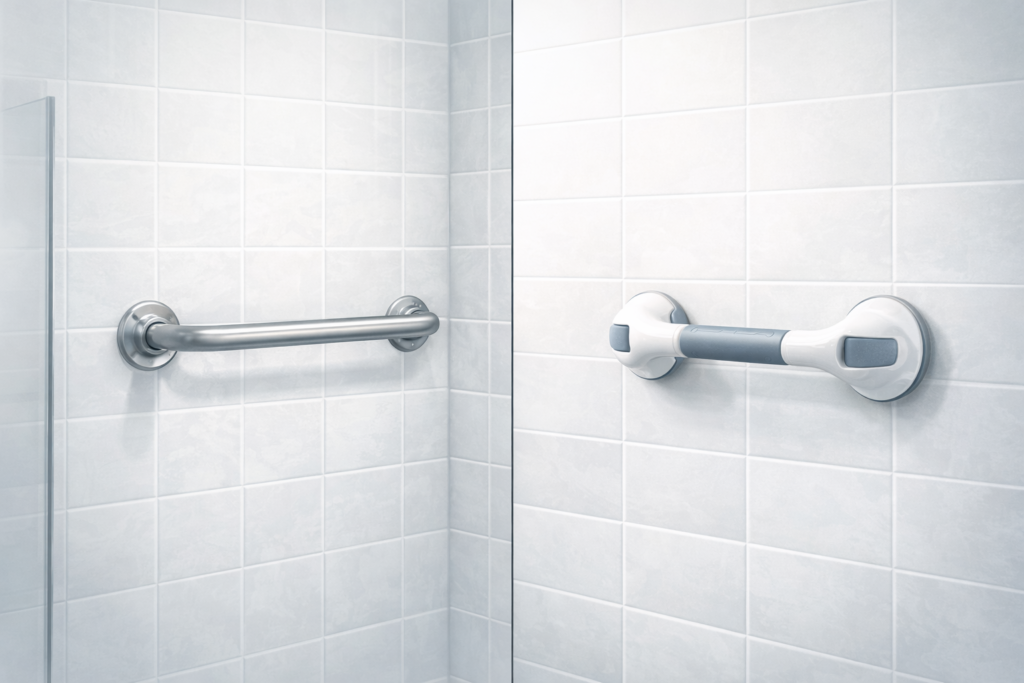
These bars are secured directly into wall studs. They offer the highest level of stability and are ideal for long-term safety improvements.
They are best for:
- Showers
- Bathtubs
- Next to toilets
- Long-term installations
Suction Grab Bars
Suction grab bars attach to smooth surfaces like tile using suction cups. They are easier to install but generally provide less stability than permanently mounted bars. For a closer look at how these compare to permanently mounted options, see our detailed guide on Grab Bars vs Suction Grab Bars.
How to Choose the Right Grab Bar Length
Grab bars come in various lengths, commonly ranging from 12 to 36 inches. The right length depends on where the bar will be installed and how it will be used.
General guidance:
- 12–16 inches: Near toilets for vertical support
- 18–24 inches: Inside showers for stability
- 24–36 inches: Along longer walls or bathtub edges
Longer bars provide more hand placement flexibility, while shorter bars work well in tight spaces.
Best Placement for Bathroom Grab Bars
Placement matters just as much as bar type. Improper positioning can reduce effectiveness and create unsafe habits.
Common placement areas include:
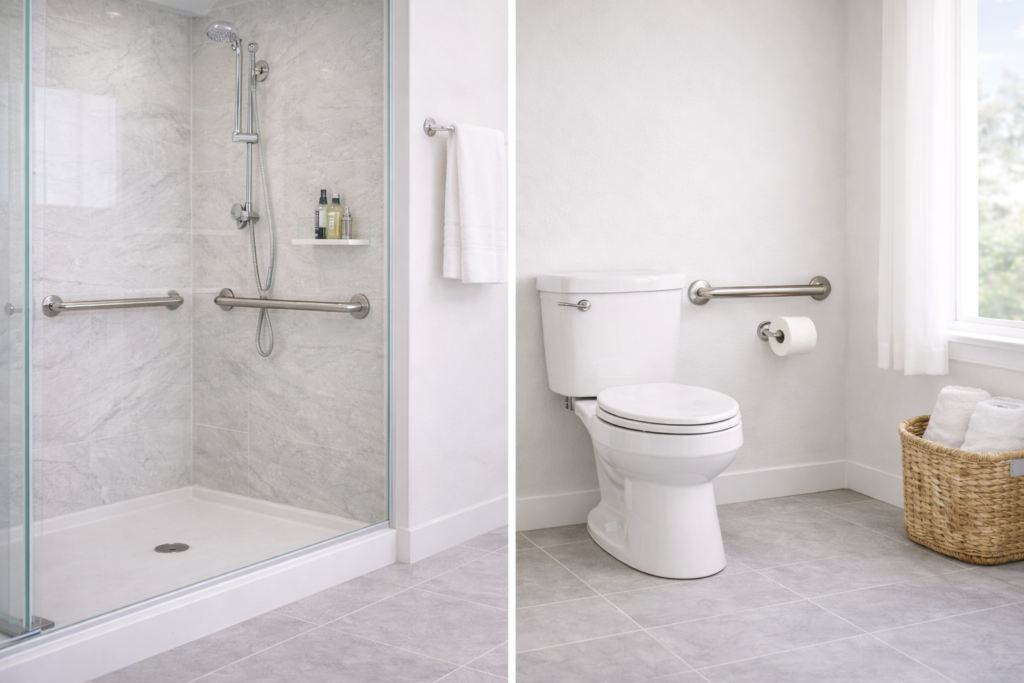
- Horizontally along shower walls
- Vertically near shower entrances
- Beside the toilet
- Along the bathtub wall
For detailed guidance on positioning grab bars safely around showers, tubs, and toilets, see our guide on where to place grab bars in the bathroom.
What to Look for in a Safe Grab Bar
When evaluating grab bars, look for:
- Weight capacity of at least 250–300 pounds
- Non-slip or textured grip surface
- Rust-resistant material (stainless steel is common)
- Secure mounting hardware
- Rounded edges for comfort
Avoid towel bars or decorative handles, as they are not designed to support body weight.
When Grab Bars Are Better Than Other Support Options
Grab bars are often the right choice when balance support is needed without raising height. In some cases, height and handles work together.
For example, if standing from the toilet feels difficult due to height, you may also consider adjusting toilet height.
If height is the main concern, our guide on how to choose the right toilet height for seniors explains when raising the toilet may improve comfort and safety.
If toilet height is correct but balance remains a concern, support rails may help.
In situations where added leverage is needed beside the toilet, our recommendations for toilet safety rails for seniors provide additional stability without permanent installation.
Common Mistakes to Avoid
- Installing bars into drywall without studs
- Relying on suction bars for full body weight
- Placing bars too high or too low
- Choosing decorative handles instead of rated safety bars
- Delaying installation until after a fall occurs
Final Thoughts
The right grab bars can make everyday bathroom use safer and more comfortable for seniors. Choosing the proper length, installation type, and placement ensures the support feels stable and reliable.
When in doubt, prioritize secure mounting and thoughtful positioning. Small adjustments today can help maintain independence and reduce fall risk over time.
Installing grab bars before mobility challenges become severe is one of the simplest ways to make a bathroom safer without major renovations.
For a broader overview of home safety improvements, see our full guide to bathroom safety for seniors.
Frequently Asked Questions (FAQ)
Are suction grab bars safe for seniors?
Suction grab bars can provide light support when properly installed on smooth surfaces. However, they are generally not as stable as wall-mounted grab bars secured into studs.
How high should grab bars be installed?
Grab bars are typically installed between 33 and 36 inches from the floor, depending on user height and placement location.
How much weight can bathroom grab bars support?
Most rated grab bars support at least 250 pounds, with many models supporting 300 pounds or more when properly installed.
Can grab bars be installed without remodeling?
Yes. Many grab bars can be installed directly into wall studs without major remodeling, making them a practical safety upgrade.