

How to Choose the Right Toilet Height for Seniors
As we age, everyday movements like sitting down and standing up can become more difficult — especially in the bathroom. One of the most common issues seniors experience is a toilet that feels too low, making it harder to stand safely and comfortably.
This guide explains how toilet height affects comfort, balance, and safety, and how to determine whether a raised seat, safety rails, or a full support frame may help. The goal is to make everyday bathroom use safer at home, without unnecessary equipment or remodeling.
This article is part of our broader Bathroom Safety guides focused on making everyday home bathrooms safer for seniors.
This article contains affiliate links. If you make a purchase through these links, we may earn a small commission at no extra cost to you.
What Is Standard Toilet Height?
Most standard toilets measure 14 to 15 inches from the floor to the top of the seat. While this height works well for many adults, it can feel low for seniors with knee pain, hip stiffness, balance concerns, or reduced leg strength.
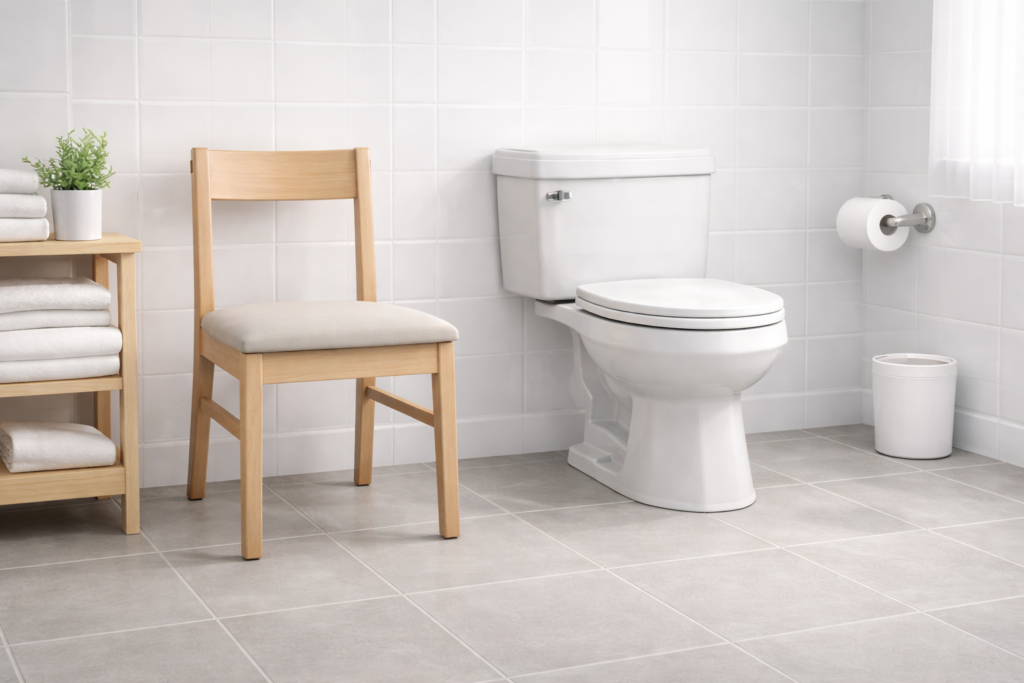
Comfort-height or chair-height toilets are typically 17 to 19 inches high, which is closer to the height of a standard chair and often easier to use for sitting and standing.
Why Toilet Height Matters for Seniors
Toilet height plays a major role in how much effort is required to sit down and stand back up. A lower toilet increases strain on the knees and hips and may require more balance and strength than some seniors are comfortable using.
When a toilet is too low, seniors may:
- Struggle to stand without assistance
- Lose balance during transfers
- Rely on unsafe supports like towel bars or sinks
Choosing the right height can significantly reduce fall risk and improve daily comfort.
Signs a Toilet May Be Too Low
A toilet may be too low if:
- Standing up requires pushing hard with the arms
- Knees or hips feel strained after use
- Balance feels unsteady when rising
- Assistance is needed from another person
- The toilet feels noticeably lower than a chair
If one or more of these signs are present, adjusting toilet height or adding support may help.
How to Determine the Right Toilet Height
A simple way to estimate a comfortable toilet height is to compare it to chair height. Many seniors find it easier to stand from a surface where the hips are slightly higher than the knees.
General guidelines:
- Lower body strength intact: 15–16 inches may still work
- Mild difficulty standing: 17–18 inches is often more comfortable
- Moderate difficulty or joint pain: 18–19 inches or added support
Exact needs vary, but comfort and stability should guide the decision.
When a Raised Toilet Seat Can Help
A raised toilet seat increases the height of the existing toilet, making it easier to sit and stand without changing the toilet itself. These seats are often a good solution when height is the main issue and balance is still relatively stable.
When Safety Rails or Frames Are a Better Option
If difficulty standing is caused by balance issues or reduced leg strength, adding support handles may be more helpful than height alone. Toilet safety rails and Toilet safety frames provide leverage and stability during transfers.
Common Mistakes to Avoid
- Choosing height without measuring
- Adding height but ignoring balance support
- Using unstable objects for leverage
- Assuming one solution works for everyone
- Delaying changes after early warning signs
Final Thoughts
Choosing the right toilet height can make a meaningful difference in daily comfort and safety for seniors. Whether that means adding height, adding support, or combining both, the best solution is one that feels stable, comfortable, and appropriate for the individual’s mobility needs.
Small adjustments made early can help support independence and reduce fall risk at home.
Frequently Asked Questions (FAQ)
What is the best toilet height for seniors?
Most seniors are more comfortable with a toilet height between 17 and 19 inches, similar to a standard chair.
Can a raised toilet seat replace safety rails?
A raised seat helps with height but does not provide balance support. Some seniors benefit from using both height and handles together.
Is it better to raise the toilet or add support handles?
It depends on the main challenge. Height helps reduce strain, while handles help with balance and stability.
Should toilet height be adjusted before problems occur?
Yes. Addressing height issues early can make bathroom use safer and more comfortable over time.
Before you go — don’t miss this!
Free Bathroom Safety Checklist (PDF)
If you’re making updates to improve bathroom safety, this checklist can help you catch small issues that are easy to overlook.
It’s a quick, printable guide for seniors and caregivers.
👇Get the free Bathroom Safety Checklist here: