

Toilet Safety Rails vs Raised Toilet Seats: Which Is Better for Seniors?
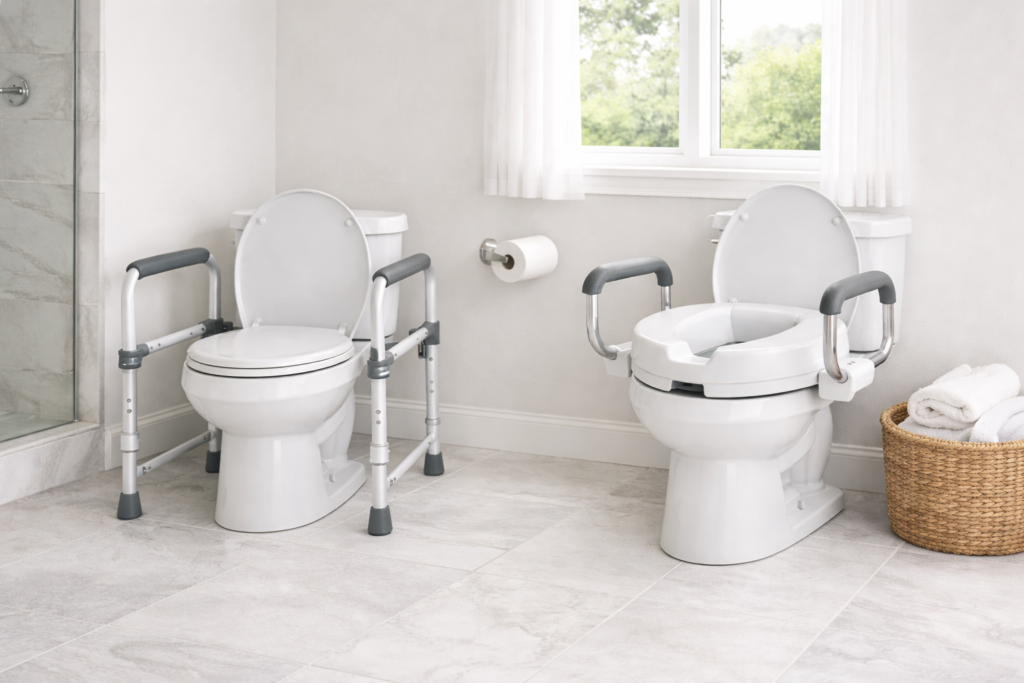
Standing up from a low toilet can be challenging for many seniors, especially those dealing with balance issues, knee pain, or limited mobility. When looking for bathroom safety solutions, two of the most common options are toilet safety rails and raised toilet seats — but choosing between them isn’t always straightforward.
In this guide, we’ll explain the key differences between toilet safety rails and raised toilet seats, when each option works best, and how to decide which is safer for your specific needs.
If you’re evaluating multiple bathroom support options, our Bathroom Safety Guide covers additional products and strategies to reduce fall risk at home.
Both toilet safety rails and raised toilet seats are designed to make using the toilet safer, but they solve different problems. Understanding which option provides the right type of support can help prevent falls and make daily bathroom routines easier.
This article contains affiliate links. If you make a purchase through these links, we may earn a small commission at no extra cost to you.
Quick Answer: Toilet Safety Rails vs Raised Toilet Seats
Toilet safety rails are best for seniors who need arm support and balance assistance when sitting or standing.
Raised toilet seats are best when seat height is the main issue, especially for knee or hip pain.
Some seniors benefit from using both, depending on mobility level and bathroom layout.
What Are Toilet Safety Rails?
Toilet safety rails are support frames designed to provide sturdy armrests on either side of the toilet. They help seniors push up and lower themselves safely by offering balance support and leverage.
Most toilet safety rails either bolt directly to the toilet or stand on the floor around it. While they do not raise the seat height, they are especially helpful for seniors who feel unsteady or worry about losing balance.
What Are Raised Toilet Seats?
Raised toilet seats increase the height of the toilet, usually by 2 to 5 inches. This makes sitting down and standing up easier by reducing how far the user needs to lower themselves.
Some raised toilet seats are simple height extenders, while others include built-in handles for additional support. These seats are often chosen by seniors with knee or hip pain who find low toilets uncomfortable.
Toilet Safety Rails vs Raised Toilet Seats Compared
| Feature | Toilet Safety Rails | Raised Toilet Seats |
|---|---|---|
| Adds Seat Height | No | Yes |
| Arm Support for Standing | Yes | Some Models |
| Balance Assistance | Yes | Limited |
| Floor Space Needed | More | Minimal |
| Typical Installation | Tool-free or bolted | Clamp or bolted |
| Best Use Case | Balance support | Knee or hip pain |
Which Option Is Better for You?
Seniors With Balance or Stability Issues
Toilet safety rails are usually the better choice for seniors who feel unsteady or worry about falling when sitting or standing. The armrests provide physical support and confidence during use.
Seniors With Knee or Hip Pain
Raised toilet seats are often more helpful when pain or stiffness makes it hard to stand up from a low position. Increasing the seat height reduces strain on joints.
Small Bathrooms
In tight spaces, raised toilet seats typically work better because they don’t require additional floor space. Some compact models with handles offer a good balance of height and support.
Post-Surgery Recovery
For short-term recovery, the best option depends on whether height or balance is the main concern. Some seniors may benefit from a raised seat, while others need the added stability of rails.
Can You Use Toilet Safety Rails and a Raised Seat Together?
In some cases, seniors with significant mobility challenges may use both a raised toilet seat and toilet safety rails together. This combination provides added height as well as arm support, but compatibility and stability are important.
Safety Tips When Choosing Toilet Support Options
- Always check weight capacity before purchasing
- Make sure the product fits your toilet shape
- Install according to manufacturer instructions
- Test stability before full use
- Add wall-mounted grab bars if balance issues persist
Frequently Asked Questions
Is a toilet safety rail or raised toilet seat safer for seniors?
Both can be safe when properly installed. Toilet safety rails provide balance support, while raised toilet seats reduce strain from low seating.
Do raised toilet seats wobble?
High-quality models that are properly secured should not wobble, but bolt-on designs are generally more stable than clamp-on versions.
Can a raised toilet seat replace toilet safety rails?
Not always. If balance is the main concern, rails may still be needed even with a raised seat.
Before you go — don’t miss this!
Free Bathroom Safety Checklist (PDF)
If you’re making updates to improve bathroom safety, this checklist can help you catch small issues that are easy to overlook.
It’s a quick, printable guide for seniors and caregivers.
👇Get the free Bathroom Safety Checklist here:
Final Thoughts
There is no single solution that works for every senior. Toilet safety rails are best for balance support, while raised toilet seats help reduce strain from low seating. Choosing the right option depends on mobility, comfort, and bathroom layout.
To explore specific products, you can review our guides to toilet safety rails and raised toilet seats to find the safest option for your needs.