

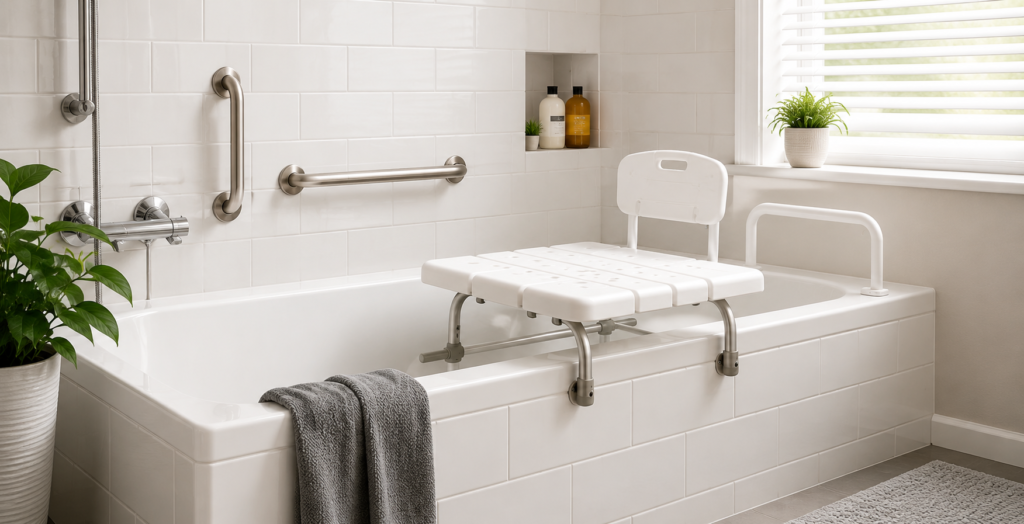
How to Make a Bathtub Safer for Seniors
Bathtubs can become one of the most dangerous areas in the home for older adults due to slippery surfaces, high step-over walls, poor lighting, and limited stability while entering or exiting the tub. Even small bathroom hazards can increase the risk of serious slips and falls, especially for seniors aging in place.
Fortunately, a safer bathtub setup does not always require a full bathroom remodel. Simple upgrades like grab bars, non-slip surfaces, shower seating, and improved lighting can make bathing safer, more comfortable, and more accessible for seniors and caregivers alike.
In this guide, we’ll cover practical bathtub safety tips, recommended safety products, and important bathroom modifications that can help reduce fall risks and improve confidence during daily bathing routines.
This article may contain affiliate links. If you purchase through these links, Everyday Ease may earn a small commission at no additional cost to you. This helps support our content and allows us to continue creating helpful home safety guides for seniors and caregivers.
If you’re specifically looking for shower support solutions, see our guide on best grab bars for showers for safer bathroom accessibility.
Quick Ways to Make a Bathtub Safer
Improving bathtub safety does not always require expensive renovations or major bathroom remodeling. In many cases, a few well-planned safety upgrades can dramatically reduce the risk of slips and falls while making bathing more comfortable and accessible for seniors.
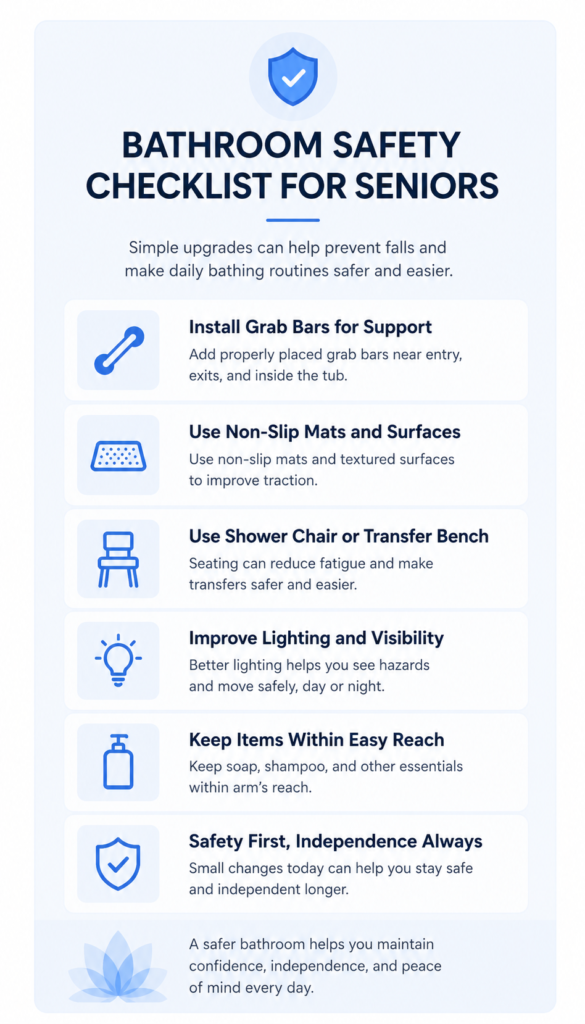
Quick Safety List
These simple changes can help seniors maintain independence while reducing common bathroom hazards that often lead to falls or injuries. The best setup depends on the bathroom layout, mobility needs, and level of support required during bathing.
For a complete bathroom fall prevention plan, see our Bathroom Safety Checklist for Seniors Living Alone for additional safety upgrades and accessibility ideas.
Install Grab Bars for Better Stability
Grab bars are one of the most effective ways to improve bathtub safety for seniors. Properly installed grab bars provide extra support when stepping into the tub, sitting down, standing up, or repositioning during bathing.
Bathrooms are one of the most common places for slips and falls because wet surfaces can quickly become slippery and unstable. Secure grab bars can help improve balance and reduce the risk of losing footing in and around the bathtub.
Best Placement Guidance
Some of the safest grab bar locations around a bathtub include:
For maximum safety, grab bars should always be securely anchored into wall studs or reinforced backing. Suction grab bars may provide temporary balance assistance, but permanently mounted grab bars offer much more reliable support for daily use.
To learn more about safe installation and positioning, explore our guides on where to place grab bars in the bathroom, grab bar height recommendations, and best grab bars for showers.
Use Non-Slip Surfaces Inside and Outside the Tub
Slippery bathtub surfaces are one of the biggest fall risks for seniors. Water, soap residue, and smooth tub materials can quickly create unsafe conditions, especially when entering, exiting, or standing for long periods during bathing.
Adding non-slip surfaces can help improve traction and reduce the chance of slipping both inside and outside the bathtub.
Safety Recommendations
It is also important to choose bath mats designed specifically for wet bathroom environments. Mats that slide easily or hold excess moisture can create additional safety hazards instead of preventing them. For additional traction, consider using a high-quality non-slip bath mat both inside and outside the tub.
Improving traction is often most effective when combined with other support features like grab bars, shower seating, and better lighting throughout the bathroom.
Consider a Shower Chair or Transfer Bench
For seniors with limited balance, joint pain, weakness, or mobility concerns, shower seating can make bathing significantly safer and more comfortable. Sitting while bathing helps reduce fatigue and lowers the risk of slipping on wet surfaces inside the tub.
Shower chairs and transfer benches are two of the most common bathtub safety solutions for older adults aging in place.
A standard shower chair sits fully inside the bathtub or shower area and works well for seniors who can safely step over the tub wall with minimal assistance.
A transfer bench extends partially outside the bathtub, allowing users to sit first and then slide safely into the tub. This setup is often easier and safer for seniors with limited mobility or higher fall risk.
Some of the biggest benefits of shower seating include:
To compare different bathing support options, explore our guides on shower chair vs shower stool and best shower transfer benches for seniors.
Choosing the right seating can make bathing much safer. See our guide to the best shower chairs for seniors for top-rated options that provide additional support and stability.
Choosing the right shower seating option depends on the bathroom layout, mobility level, and how much transfer support is needed during bathing.
Improve Bathroom Lighting and Visibility
Poor lighting can make bathrooms significantly more dangerous for seniors, especially during nighttime trips when visibility is lower and reaction times may be slower. Shadows, dark corners, and poorly lit pathways can increase the risk of slips, missed steps, and falls around the bathtub area.
Some of the best ways to improve bathroom visibility include:
Motion-activated lighting can be especially helpful for seniors who frequently use the bathroom during the night. Automatic lighting reduces the need to search for switches in the dark and can make movement through the bathroom safer and easier.
For additional nighttime safety ideas, see our guide on best motion sensor night lights for seniors to help improve visibility throughout the home.
Lighting improvements may seem small, but they can play a major role in reducing falls and making the bathroom feel safer and more accessible overall.
Common Bathtub Safety Mistakes to Avoid
Even small bathroom safety mistakes can increase the risk of slips and falls for seniors. Many common hazards are easy to overlook until an accident happens, especially in wet bathtub areas where balance and stability are already more challenging.
While bathtub safety is an important part of aging in place, a complete fall prevention plan should address the entire bathroom. Our guide on bathroom fall prevention tips for seniors covers practical ways to reduce fall risks throughout the bathroom.
Final Thoughts on Bathtub Safety for Seniors
Creating a safer bathtub setup does not always require major renovations or expensive remodeling projects. In many cases, a combination of simple safety upgrades like grab bars, non-slip surfaces, shower seating, and better lighting can dramatically reduce fall risks and improve confidence during daily bathing routines.
The best bathtub safety setup depends on the individual’s mobility level, bathroom layout, and support needs. Small changes made early can help seniors maintain independence longer while making the bathroom safer and more comfortable to use each day.
Improving bathroom safety is often one of the most important steps in creating a safer aging-in-place environment. Taking time to identify hazards and add proper support features can help prevent injuries before they happen.
For more bathroom accessibility ideas, explore our guides on best grab bars for showers, grab bar placement recommendations, shower chair vs shower stool, walk-in tub vs walk-in shower and best motion sensor night lights for seniors.
Frequently Asked Questions
What is the best way to make a bathtub safer for seniors?
The best way to make a bathtub safer for seniors is to combine several safety upgrades, including properly mounted grab bars, non-slip surfaces, shower seating, better lighting, and easy-to-reach bathing essentials.
Are grab bars necessary for bathtub safety?
Grab bars are one of the most helpful bathtub safety upgrades because they provide stable support when entering, exiting, standing, or sitting near the tub. They should be securely mounted into wall studs or proper backing.
Is a shower chair or transfer bench better for bathtub safety?
A shower chair works well for seniors who can safely step into the tub, while a transfer bench is often better for those who need extra help getting over the bathtub wall. Transfer benches allow users to sit first and slide into the tub more safely.
Do non-slip bath mats really help prevent falls?
Non-slip bath mats can help improve traction inside and outside the bathtub, but they should have strong grip backing and be replaced if they become worn, loose, or curled at the edges.
How can I make nighttime bathroom trips safer?
Motion sensor night lights, brighter bathroom lighting, clear walkways, and easy-to-reach support features can help make nighttime bathroom trips safer for seniors.
Can bathtub safety upgrades help seniors age in place?
Yes, bathtub safety upgrades can help seniors maintain independence by reducing fall risks and making daily bathing routines safer, easier, and more comfortable.