

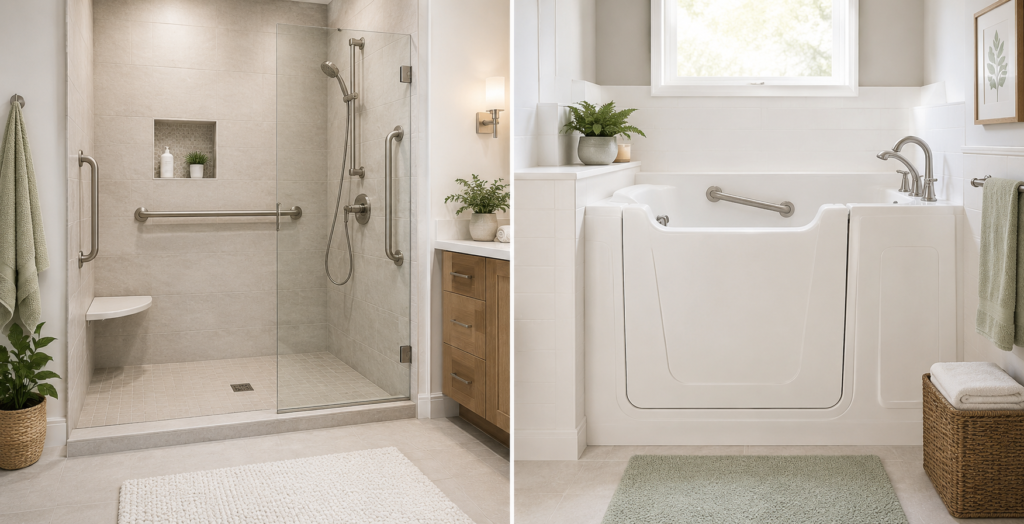
Walk-In Tub vs Walk-In Shower: Which Is Better for Seniors?
Choosing between a walk-in tub and a walk-in shower is one of the biggest decisions when creating a safer bathroom for aging in place. Both options can reduce fall risk and improve accessibility, but the right choice depends on your mobility, health needs, available space, and budget.
A walk-in shower provides easy access, requires less maintenance, and is often the better long-term solution for active seniors. A walk-in tub, on the other hand, offers a safer bathing experience for those who enjoy soaking or need hydrotherapy to help relieve arthritis, joint pain, or muscle stiffness.
In this guide, we’ll compare walk-in tubs and walk-in showers side by side, including safety, accessibility, installation costs, maintenance, comfort, and who each option is best suited for. By the end, you’ll have a clear understanding of which solution is the better fit for your home and lifestyle.
As an Amazon Associate, Everyday Ease Home earns from qualifying purchases. This comes at no additional cost to you and helps support our work creating free resources for seniors and caregivers.
Quick Answer: Walk-In Tub vs Walk-In Shower
For most seniors, a walk-in shower is the better overall choice because it offers easier entry, lower installation costs, less maintenance, and greater accessibility for walkers and wheelchairs.
A walk-in tub may be the better option for seniors who enjoy soaking or need hydrotherapy to help manage arthritis, chronic pain, or poor circulation. However, users must be able to sit inside the tub while it fills and drains, which can be inconvenient for some individuals.
At a Glance
Choose a Walk-In Shower if you:
- Want the easiest entry and exit
- Use a walker or wheelchair
- Prefer quick showers over baths
- Have a smaller remodeling budget
- Want lower maintenance
Choose a Walk-In Tub if you:
- Enjoy soaking in warm water
- Have arthritis or chronic joint pain
- Want hydrotherapy features
- Can comfortably sit while the tub fills and drains
- Have enough bathroom space and budget for installation
Bottom Line: While both options can make a bathroom safer, walk-in showers are generally the better long-term solution for most seniors, while walk-in tubs are best for those who specifically benefit from therapeutic bathing.
A walk-in tub or walk-in shower is just one part of creating a safer bathroom. Explore our complete guide to the best bathroom safety products for seniors for additional ways to reduce fall risk.
| Feature | Walk-In Shower | Walk-In Tub |
|---|---|---|
| Accessibility | ⭐⭐⭐⭐⭐ | ⭐⭐⭐⭐☆ |
| Fall Risk | Lower | Low (with proper use) |
| Installation Cost | $$ | $$$$ |
| Maintenance | Low | Moderate |
| Therapeutic Benefits | Limited | Excellent |
| Best For | Most seniors | Arthritis & chronic pain |
| Overall Winner | 🏆 Walk-In Shower | — |
Walk-In Shower: Pros and Cons
Walk-in showers have become one of the most popular bathroom upgrades for seniors because they offer easy access, excellent accessibility, and a lower risk of slips and falls. With a low or zero-threshold entry, they eliminate the need to step over the high side of a traditional bathtub, making daily bathing safer and more convenient.
Many walk-in showers can also be customized with grab bars, built-in benches, handheld shower heads, and non-slip flooring, creating a bathroom that supports aging in place for years to come.
Pros
- Easy step-in or zero-threshold entry
- Excellent accessibility for walkers and wheelchairs
- Lower fall risk than traditional bathtubs
- Easier for caregivers to assist with bathing
- Can be customized with grab bars, benches, and handheld shower heads
- Typically costs less to install than a walk-in tub
- Simple to clean and maintain
Cons
- Does not provide the therapeutic benefits of soaking
- Standing may be uncomfortable without a shower chair or built-in bench
- Water can escape if the shower isn’t properly designed
- Premium features can increase remodeling costs
Best For
Walk-in showers are the best choice for most seniors, especially those who want the easiest entry and exit, plan to age in place, use mobility aids, or prefer a practical, low-maintenance bathing solution. They also provide greater flexibility if mobility needs change over time.
Walk-In Tub: Pros and Cons
Walk-in tubs are designed to make bathing safer while allowing seniors to enjoy the comfort of soaking in warm water. Unlike a traditional bathtub, a walk-in tub features a watertight door, a low step-over threshold, and a built-in seat, allowing users to bathe in a seated position rather than lowering themselves to the floor of the tub.
Many models also include hydrotherapy jets, heated backrests, and quick-fill or fast-drain systems, making them especially appealing for seniors with arthritis, joint pain, or limited mobility.
Pros
- Low step-in entry reduces climbing over a bathtub wall
- Built-in seat provides a comfortable bathing position
- Warm water soaking may help ease arthritis and muscle pain
- Hydrotherapy options available on many models
- Can improve comfort and independence for some seniors
- Available with numerous accessibility features
Cons
- Must remain seated while the tub fills and drains
- Higher purchase and installation costs than walk-in showers
- Uses significantly more water
- Requires more cleaning and maintenance
- May not accommodate wheelchair users as easily as a walk-in shower
Best For
Walk-in tubs are best suited for seniors who enjoy soaking, experience chronic joint or muscle pain, or want the therapeutic benefits of hydrotherapy. They can be an excellent option for individuals who can safely transfer onto the built-in seat and don’t mind waiting for the tub to fill and drain.
Safety Comparison: Which Is Safer?
Both walk-in tubs and walk-in showers are significantly safer than traditional bathtubs, but they reduce fall risk in different ways. The safer option ultimately depends on a person’s mobility, balance, and bathing preferences.
Walk-In Shower Safety
For most seniors, walk-in showers offer the greatest overall safety because they eliminate the need to step over a high bathtub wall. Low- or zero-threshold entry makes it easier to enter and exit the shower, particularly for those who use walkers, wheelchairs, or other mobility aids.
Walk-in showers can also be equipped with:
- Grab bars for added stability
- Built-in benches or shower chairs
- Handheld shower heads
- Non-slip flooring and bath mats
- Wide doorways for easier caregiver assistance
These features help reduce fall risk while making daily bathing more comfortable and accessible.
Walk-In Tub Safety
Walk-in tubs also improve safety by allowing users to bathe while seated. The low-entry door reduces the need to climb over a traditional bathtub wall, while the built-in seat minimizes the risk of slipping during bathing.
However, walk-in tubs require users to remain seated while the tub fills and drains. Some seniors may also find transferring onto the built-in seat more difficult than simply walking into a shower.
If replacing your bathtub isn’t practical, there are several ways to make a bathtub safer for seniors without a full remodel.
Which Is Safer?
For most seniors, a walk-in shower is generally the safer choice because it offers easier entry, greater accessibility, and better compatibility with mobility aids.
A walk-in tub may be the better option for seniors who benefit from seated bathing or hydrotherapy, provided they can safely transfer onto the seat and are comfortable waiting while the tub fills and empties.
Winner: 🏆 Walk-In Shower for overall accessibility and long-term safety.
Whether you choose a walk-in tub or shower, following proven bathroom fall prevention tips can further reduce the risk of slips and injuries.
Which Option Is Better for Your Needs?
The best choice depends on your mobility, health conditions, lifestyle, and long-term goals. Here’s how walk-in tubs and walk-in showers compare for some of the most common situations seniors face.
Best for Arthritis or Chronic Pain
🏆 Winner: Walk-In Tub
Warm water soaking and optional hydrotherapy jets can help relieve joint pain, muscle stiffness, and discomfort associated with arthritis. Many seniors find regular soaking improves comfort and relaxation.
Best for Limited Mobility
🏆 Winner: Walk-In Shower
A low-threshold or zero-entry shower is generally easier to access than a walk-in tub and works well with walkers, canes, and other mobility aids.
Best for Wheelchair Users
🏆 Winner: Walk-In Shower
Roll-in or barrier-free walk-in showers provide the greatest accessibility and allow many wheelchair users to shower more independently or with caregiver assistance.
Best for Caregivers
🏆 Winner: Walk-In Shower
Walk-in showers provide more space for caregivers to assist safely during bathing and make transfers easier than most walk-in tubs.
Best for Smaller Bathrooms
🏆 Winner: Walk-In Shower
Walk-in showers are often easier to incorporate into existing bathroom layouts and generally require less space than a walk-in tub.
Best for Aging in Place
🏆 Winner: Walk-In Shower
For most homeowners planning to remain in their homes for years to come, a walk-in shower offers the best combination of accessibility, flexibility, and long-term usability as mobility needs change.
Overall Recommendation
Both options can make a bathroom significantly safer than a traditional bathtub. However, a walk-in shower is the better choice for most seniors because it offers easier access, greater flexibility, lower maintenance, and better compatibility with mobility aids. A walk-in tub is an excellent option for seniors who prioritize therapeutic soaking and can comfortably use its built-in seating.
Cost Comparison: Walk-In Tub vs Walk-In Shower
The total cost of a bathroom remodel depends on the size of the project, plumbing changes, accessibility upgrades, and the products you choose. In general, walk-in showers are more affordable than walk-in tubs and are often less expensive to maintain over time.
| Expense | Walk-In Shower | Walk-In Tub |
|---|---|---|
| Product Cost | $$ | $$$$ |
| Installation | Moderate | High |
| Water Usage | Lower | Higher |
| Maintenance | Lower | Moderate |
| Long-Term Value | Excellent | Good |
Walk-In Shower Costs
Most walk-in shower installations range from $4,000 to $12,000 or more, depending on the size of the shower, tile selection, plumbing modifications, and accessibility features such as built-in seating or grab bars.
Walk-In Tub Costs
Walk-in tubs typically cost between $8,000 and $20,000 or more once installation is complete. Premium models with hydrotherapy jets, heated seats, and fast-fill or quick-drain systems can increase the overall price even further.
Which Offers Better Value?
For most homeowners, a walk-in shower provides the better overall value. It typically costs less to install, requires less maintenance, uses less water, and appeals to a wider range of future buyers.
A walk-in tub can be a worthwhile investment for seniors who will benefit from hydrotherapy or therapeutic soaking, but those additional benefits come with a significantly higher upfront cost.
Ways to Make Either Option Even Safer
Whether you choose a walk-in shower or a walk-in tub, adding a few well-chosen safety features can make bathing more comfortable and significantly reduce the risk of slips and falls.
Install Grab Bars
Properly installed grab bars provide secure support when entering, exiting, standing, or sitting. Place them near the shower entrance, inside the bathing area, and beside the toilet where extra stability is needed.
Installing grab bars for showers provides additional stability regardless of which bathing option you choose. Ensuring grab bars are installed at the proper height helps maximize both comfort and safety. See our grab bar height recommendations for guidance.
Add a Shower Chair or Transfer Bench
For seniors who have difficulty standing for extended periods, a shower chair or transfer bench provides a stable place to sit while bathing. Transfer benches can be especially helpful when stepping into a bathtub.
Seniors who have difficulty standing may benefit from one of the best shower chairs for seniors to improve comfort and safety.
If stepping over the threshold is difficult, a shower transfer bench can make entering the bathing area much safer.
Use Non-Slip Bath Mats
A high-quality non-slip bath mat helps reduce the risk of slipping on wet surfaces. Choose a mat with strong suction cups for the tub or shower and an absorbent, slip-resistant rug outside the bathing area.
A non-slip bath mat helps provide secure footing and reduces the chance of slipping on wet surfaces.
Install a Handheld Shower Head
Handheld shower heads make bathing easier whether standing or seated. They also simplify caregiver assistance and improve comfort for users with limited mobility.
A handheld shower head can make bathing easier for seniors, especially when paired with a shower chair or transfer bench.
Improve Bathroom Lighting
Bright, even lighting makes it easier to see wet surfaces, obstacles, and transitions between flooring materials. Motion-sensor night lights can also improve safety during nighttime bathroom visits.
Consider Additional Accessibility Upgrades
Other helpful improvements may include raised toilet seats, comfort-height toilets, wider doorways, lever-style faucet handles, and non-slip flooring. Combining several safety features often provides greater protection than relying on a single upgrade.
Tip: The safest bathrooms use multiple layers of protection. A walk-in shower or walk-in tub paired with grab bars, non-slip surfaces, proper lighting, and supportive seating creates a bathroom that’s both safer and more comfortable for aging in place.
Final Thoughts
Both walk-in tubs and walk-in showers are excellent upgrades for seniors looking to create a safer bathroom, but they serve different needs.
For most seniors, a walk-in shower is the better overall choice. It offers easier entry and exit, greater accessibility for mobility aids, lower installation and maintenance costs, and more flexibility as mobility needs change over time. It also pairs well with other bathroom safety features like grab bars, shower chairs, handheld shower heads, and non-slip flooring.
A walk-in tub may be the better option for seniors who value therapeutic soaking or need relief from arthritis, chronic pain, or muscle stiffness. While it requires a larger investment and users must remain seated while it fills and drains, many people find the comfort and hydrotherapy benefits well worth the trade-off.
Ultimately, the best choice depends on your health, mobility, budget, and long-term plans. By selecting the option that fits your needs—and combining it with other proven bathroom safety products—you can create a bathroom that supports independence, comfort, and confidence for years to come.
Frequently Asked Questions
Are walk-in showers or walk-in tubs safer for seniors?
For most seniors, walk-in showers are considered the safer option because they offer low- or zero-threshold entry, greater accessibility, and easier use with walkers, wheelchairs, and other mobility aids. Walk-in tubs also improve safety but require users to remain seated while the tub fills and drains.
Is a walk-in tub worth the extra cost?
It depends on your needs. A walk-in tub can be a worthwhile investment for seniors who experience arthritis, chronic pain, or poor circulation and benefit from regular soaking or hydrotherapy. For most homeowners, however, a walk-in shower provides better overall value and accessibility.
Which option is better for aging in place?
A walk-in shower is generally the better long-term solution for aging in place. It adapts more easily to changing mobility needs and can accommodate mobility aids, caregivers, and future accessibility upgrades.
Can Medicare pay for a walk-in tub or walk-in shower?
Original Medicare typically does not cover bathroom remodeling or walk-in tubs and showers. However, some Medicare Advantage plans, Medicaid programs, veterans’ benefits, or local assistance programs may help cover certain accessibility improvements. Coverage varies by plan and location.
Are walk-in showers wheelchair accessible?
Yes. Many walk-in showers can be designed with barrier-free or roll-in entry, making them an excellent choice for wheelchair users. Features such as grab bars, built-in benches, and handheld shower heads can further improve accessibility.
Do walk-in tubs help with arthritis?
Many people with arthritis find that soaking in warm water or using hydrotherapy jets helps reduce joint stiffness, muscle soreness, and discomfort. While a walk-in tub is not a medical treatment, it may provide meaningful comfort for some individuals.
Which costs less to install?
In most cases, walk-in showers cost less to purchase and install than walk-in tubs. A walk-in shower remodel typically ranges from $4,000 to $12,000 or more, while a walk-in tub installation often ranges from $8,000 to $20,000 or more, depending on the features and complexity of the project.
Can I replace my bathtub with a walk-in shower?
Yes. Many homeowners replace traditional bathtubs with walk-in showers to improve accessibility and reduce fall risk. This is one of the most common bathroom remodeling projects for aging in place.
What safety features should I add regardless of which option I choose?
Whether you install a walk-in shower or a walk-in tub, consider adding grab bars, non-slip bath mats, proper lighting, a handheld shower head, and a shower chair or transfer bench if additional support is needed. Combining several safety features provides better protection than relying on a single upgrade.
Which option is best overall?
For most seniors, a walk-in shower is the better overall choice because it offers greater accessibility, easier entry and exit, lower maintenance, and better compatibility with mobility aids. A walk-in tub is an excellent alternative for individuals who prioritize therapeutic soaking and can comfortably use its built-in seating.