

Bathroom Fall Prevention Tips for Seniors
Bathrooms are one of the most common places for slips and falls, especially for older adults. Wet floors, poor lighting, high bathtub walls, and limited support can quickly turn everyday routines into potential safety risks. Even small hazards like loose bath mats or hard-to-reach items can increase the chance of injury.
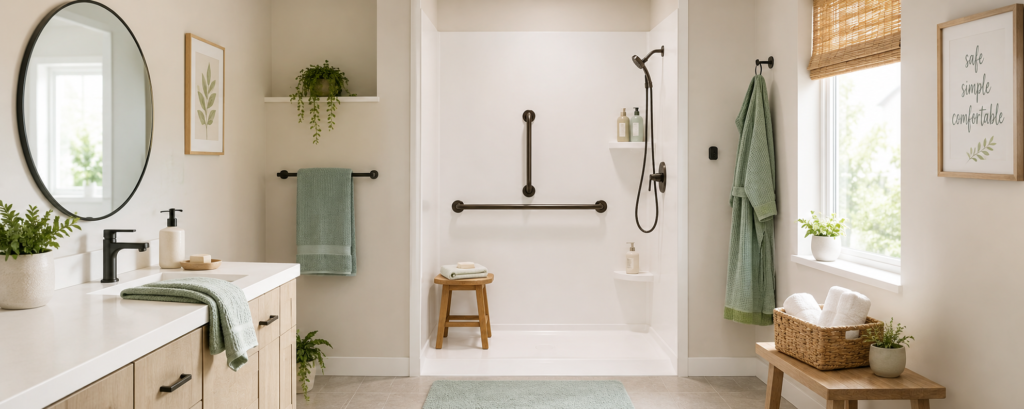
The good news is that many bathroom falls can be prevented with simple safety upgrades and better organization. Features like grab bars, non-slip surfaces, shower seating, brighter lighting, and safer bathroom layouts can help seniors feel more stable, confident, and independent at home.
In this guide, we’ll cover practical bathroom fall prevention tips for seniors, including simple changes that can improve safety without requiring a full bathroom remodel.
This article may contain affiliate links. If you purchase through these links, Everyday Ease may earn a small commission at no additional cost to you. This helps support our content and allows us to continue creating helpful home safety guides for seniors and caregivers.
Why Bathroom Falls Are So Common for Seniors
Bathrooms contain several everyday hazards that can increase the risk of slips and falls for older adults. Wet surfaces, hard flooring, tight spaces, and limited support make bathrooms one of the most dangerous rooms in the home for seniors aging in place.
As mobility, balance, vision, and strength change over time, routine bathroom tasks like stepping into a bathtub, standing from the toilet, or walking across wet floors can become more difficult and less stable.
Some of the most common bathroom fall risks for seniors include:
The good news is that many of these risks can be reduced with simple bathroom safety improvements. Small changes made early can significantly improve stability, comfort, and confidence during daily routines.
For more bathtub-specific safety upgrades, see our guide on how to make a bathtub safer for seniors for additional fall prevention ideas and accessibility tips.
Install Grab Bars in Key Bathroom Areas
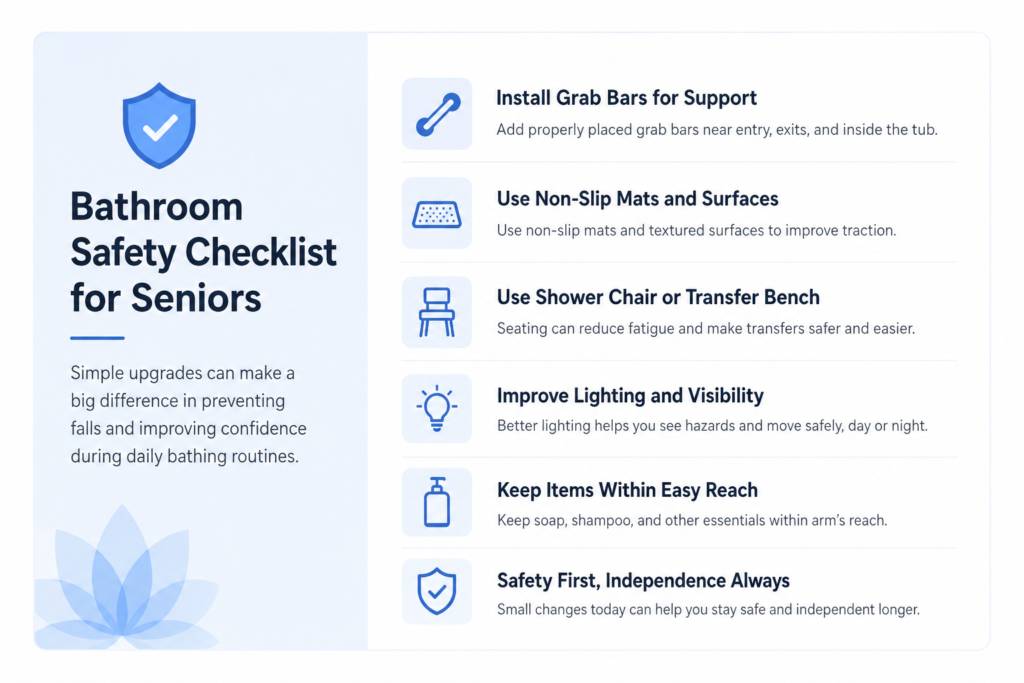
Grab bars are one of the most effective bathroom safety upgrades for seniors because they provide additional support and stability during daily movements. Properly installed grab bars can help reduce slips and improve balance when entering the shower, stepping out of the bathtub, sitting down, or standing up from the toilet.
Some of the most important areas to install grab bars include:
For maximum safety, grab bars should always be securely mounted into wall studs or reinforced backing whenever possible. Permanently mounted grab bars provide far more reliable support than towel bars or temporary suction handles.
To learn more about safe installation and positioning, explore our guides on where to place grab bars in the bathroom, grab bar height recommendations, and best grab bars for fiberglass showers.
Adding grab bars early can help seniors maintain independence longer while making everyday bathroom routines feel safer and more comfortable.
Improve Bathroom Lighting and Visibility
Poor lighting can make bathrooms much more dangerous for seniors, especially during nighttime trips when visibility is reduced and balance may already feel less stable. Dark corners, shadows, and poorly lit walkways can increase the risk of slips, missed steps, and falls around wet bathroom surfaces.
Some simple ways to improve bathroom visibility include:
Motion-activated lighting can be especially helpful for seniors who use the bathroom at night. Automatic lights reduce the need to search for switches in the dark and can make nighttime bathroom trips feel safer and easier.
For more nighttime safety ideas, explore our guide on best motion sensor night lights for seniors to help improve visibility throughout the home.
Lighting improvements are often simple to install, but they can make a major difference in helping seniors navigate the bathroom more safely and confidently.
Add Non-Slip Surfaces to Wet Areas
Wet bathroom floors and smooth bathtub surfaces can quickly become slippery, especially for seniors with limited balance or mobility. Improving traction in and around the bathroom is one of the simplest ways to help reduce fall risks and improve stability during daily routines.
Some of the best ways to improve bathroom traction include:
Non-slip bath mats can help reduce slips and provide better footing around tubs and showers. It is important to use bath mats designed specifically for wet bathroom environments. Mats that slide easily or collect excess moisture can actually increase the risk of slipping instead of preventing it.
For more ideas on improving bathtub safety, see our guide on how to make a bathtub safer for seniors for additional accessibility upgrades and fall prevention tips.
Non-slip surfaces work best when combined with other bathroom safety features like grab bars, shower seating, and better lighting throughout the room.
Use Shower Chairs or Transfer Benches for Added Stability
For seniors with balance concerns, joint pain, weakness, or limited mobility, shower seating can make bathroom routines significantly safer and more comfortable. Sitting while bathing helps reduce fatigue and lowers the risk of slipping on wet surfaces inside the shower or bathtub.
Shower chairs are designed to sit fully inside the bathtub or shower area and provide a stable place to sit while bathing. Transfer benches extend partially outside the bathtub, allowing users to sit first and then safely slide into the tub with less stepping and balancing required.
Some of the biggest benefits of shower seating include:
Choosing the right shower seating option depends on the bathroom layout, mobility needs, and how much transfer assistance is required. In many cases, shower seating works best when combined with grab bars and non-slip surfaces for additional support.
To compare different bathing support options, explore our guides on shower chair vs shower stool and best shower transfer benches for seniors.
For seniors who struggle with standing during bathing, our guide to the best shower chairs for seniors compares safe and stable options designed to improve comfort and reduce fall risks.
If you’re planning a bathroom remodel, comparing walk-in tubs and walk-in showers is an important first step toward reducing fall risk.
Even small seating adjustments can help seniors feel more secure and comfortable while maintaining greater independence during daily bathroom routines.
Reduce Bathroom Clutter & Keep Essentials Within Reach
Cluttered bathrooms can create unnecessary tripping hazards, especially for seniors with reduced balance, slower movement, or limited mobility. Small items left on the floor, crowded walkways, and hard-to-reach toiletries can increase the risk of slips and falls during everyday bathroom routines.
Some simple ways to improve bathroom safety and organization include:
Reducing the need to bend, stretch, or reach awkwardly can help seniors maintain better balance while moving through the bathroom. Simple organization changes can make daily routines safer and easier without requiring major renovations.
Creating a safer bathroom environment often involves a combination of better organization, improved lighting, supportive equipment, and thoughtful safety upgrades.
Using a handheld shower head allows many seniors to remain seated while bathing, helping reduce the risk of slips and falls.
For additional bathroom accessibility ideas, explore our guide on bathroom safety checklist for seniors living alone for more practical fall prevention tips throughout the home.
Improve Toilet Safety and Stability
Toilets can also become a major fall risk for seniors, especially when sitting down or standing up becomes more difficult. Low toilet heights, weak leg strength, joint pain, and limited balance can increase strain and instability during everyday bathroom use.
Some simple ways to improve toilet safety include:
Even small bathroom support features can help reduce strain on the knees and hips while improving confidence and stability. Toilet safety upgrades are especially helpful for seniors recovering from surgery, arthritis, mobility limitations, or balance concerns.
To compare different toilet safety options, explore our guides on toilet safety frame vs toilet safety rails, toilet safety rails vs raised toilet seats and raised toilet seat height recommendations.
Installing raised toilet seats for seniors is one of the easiest ways to reduce fall risk during bathroom transfers.
Creating a safer bathroom often involves combining multiple small safety improvements that work together to reduce fall risks and improve overall accessibility.
Common Bathroom Fall Prevention Mistakes to Avoid
For more bathroom safety ideas, explore our guide on how to make a bathtub safer for seniors for additional accessibility upgrades and fall prevention tips.
Small safety improvements made early can help seniors maintain independence longer while creating a more comfortable and supportive bathroom environment overall.
Final Thoughts
Preventing bathroom falls often starts with small, practical safety improvements that make everyday routines easier and more comfortable. Features like grab bars, non-slip surfaces, better lighting, shower seating, and improved organization can significantly reduce fall risks while helping seniors maintain independence at home.
The best bathroom safety setup depends on the individual’s mobility level, bathroom layout, and daily support needs. Making safety upgrades early can help create a more stable and accessible environment before accidents happen.
Many bathroom safety improvements are simple to install and do not require major renovations. Even a few thoughtful changes can make a meaningful difference in confidence, comfort, and long-term aging in place.
Learn More About Bathroom Safety
If you want to better understand bathroom safety and for more bathroom accessibility ideas, explore our guides on:
Frequently Asked Questions
What are the most common causes of bathroom falls for seniors?
Some of the most common causes of bathroom falls include wet floors, slippery bathtub surfaces, poor lighting, lack of grab bars, loose bath mats, and difficulty stepping into or out of the bathtub or shower.
How can seniors prevent falls in the bathroom?
Seniors can help prevent bathroom falls by installing grab bars, improving lighting, using non-slip surfaces, keeping walkways clear, and adding shower chairs or transfer benches when needed.
Are grab bars worth installing in a bathroom?
Yes, grab bars are one of the most effective bathroom safety upgrades because they provide stable support when entering the shower, stepping out of the bathtub, sitting down, and standing up.
Do motion sensor night lights help prevent falls?
Motion sensor night lights can improve visibility during nighttime bathroom trips and reduce the need to search for light switches in the dark, helping lower the risk of falls.
What is the safest flooring for a senior bathroom?
Slip-resistant flooring materials and non-slip bath mats are often the safest options for senior bathrooms because they provide better traction in wet environments and help reduce slipping hazards.
Can bathroom safety upgrades help seniors age in place?
Yes, bathroom safety upgrades can help seniors remain independent longer by reducing fall risks, improving accessibility, and creating a safer environment for daily routines.